 Pipes
Pipes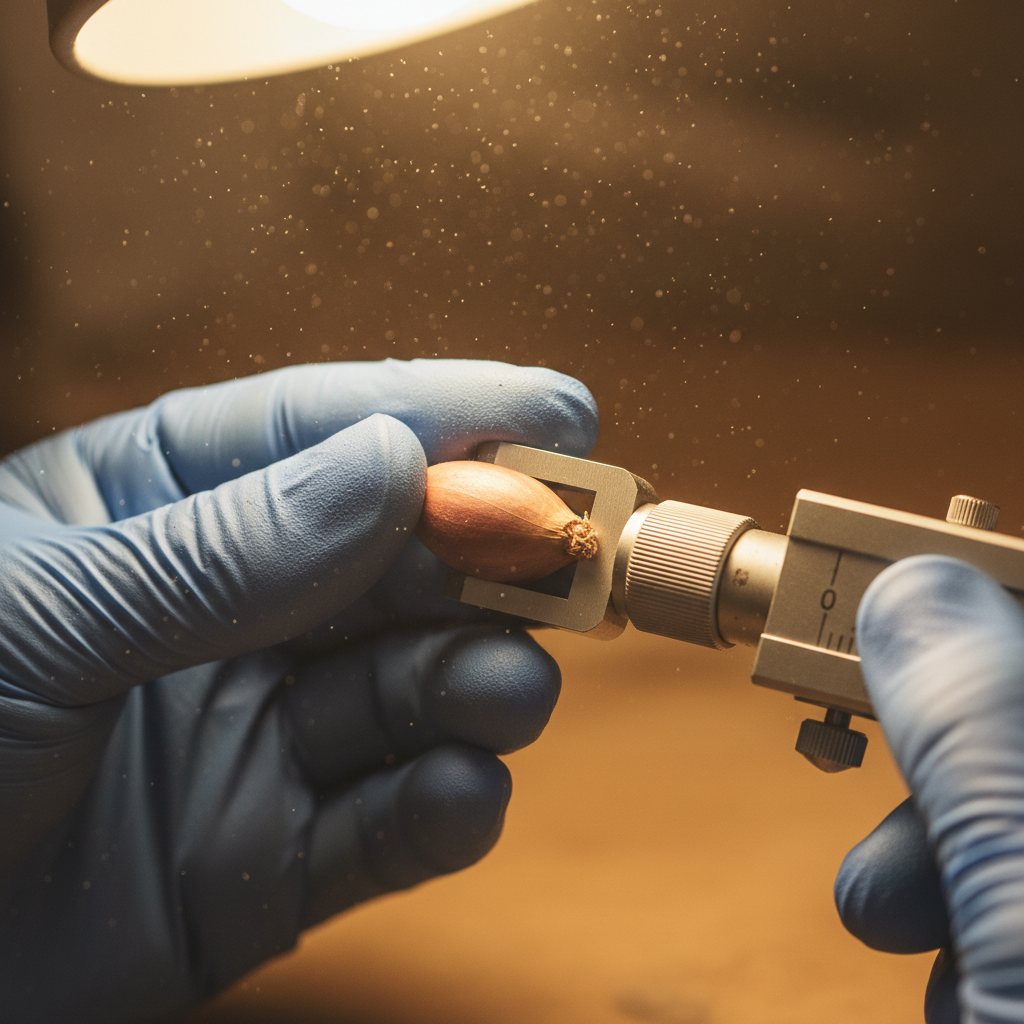
A 1912 three-manual tracker in a Pennsylvania Lutheran church. Dismantled, cleaned, releathered, revoiced, and returned — every pipe speaking in the same stone room it was built for.
Dismantling
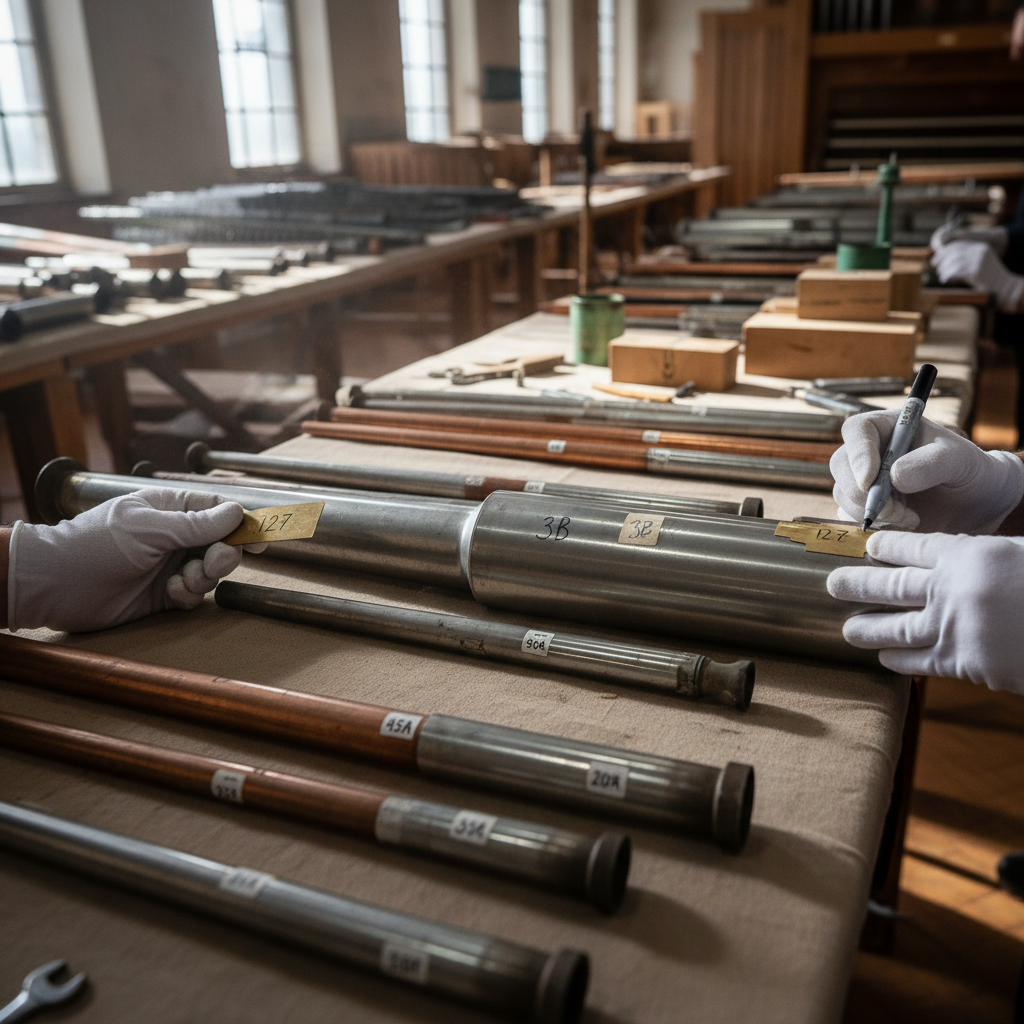
38 hrsEvery pipe numbered, every action component catalogued. Windchests disassembled and mapped before a single part leaves the instrument.
Cleaning
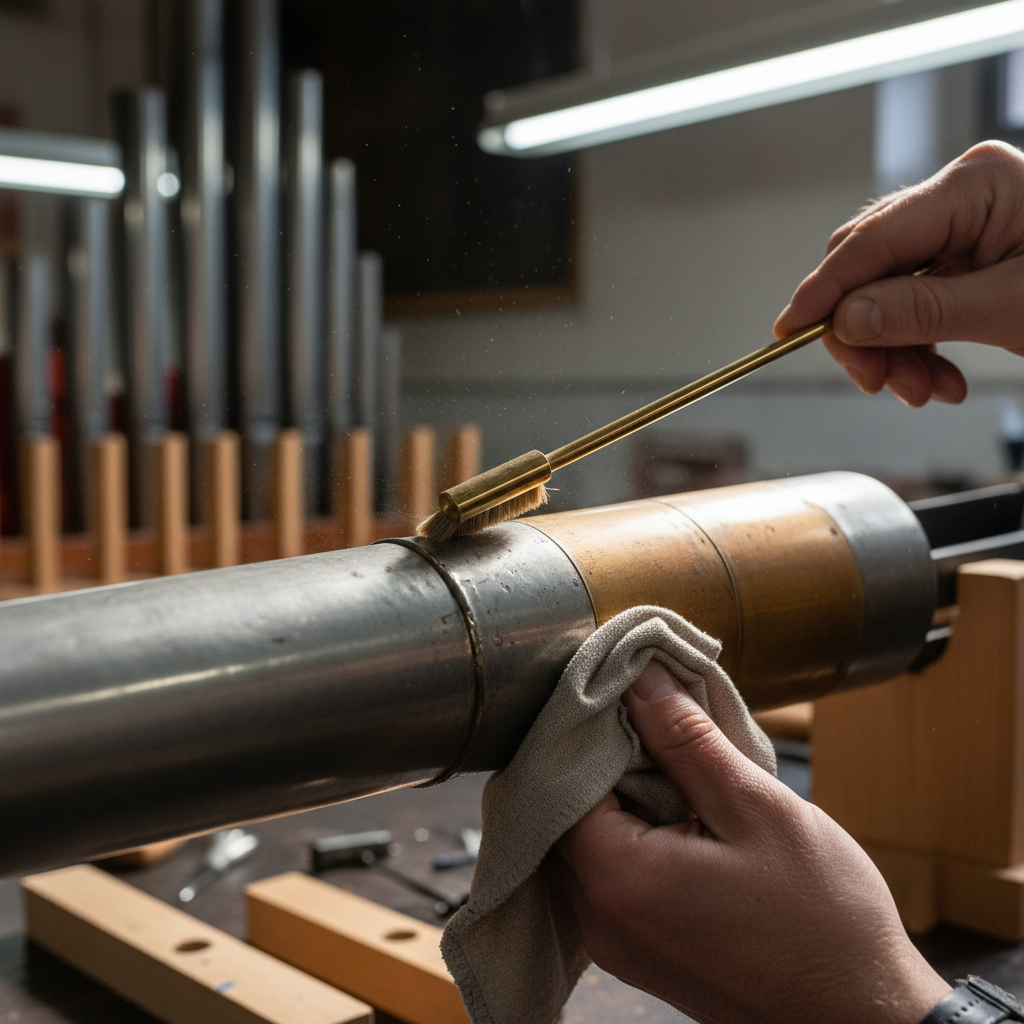
54 hrsDecades of dust, insect debris, and oxidation removed from every surface. Pipe metal treated, wood deacidified, leather remnants extracted.
Releathering
120 hrsPneumatic pouches, pallets, and key covers re-covered in period-appropriate leather. Each pouch tensioned to match the original voicing intent.

Revoicing
140 hrsEach pipe individually voiced in the instrument's home acoustic. Mouths adjusted, languid heights set, toes regulated until every rank speaks as one.
Final Tuning
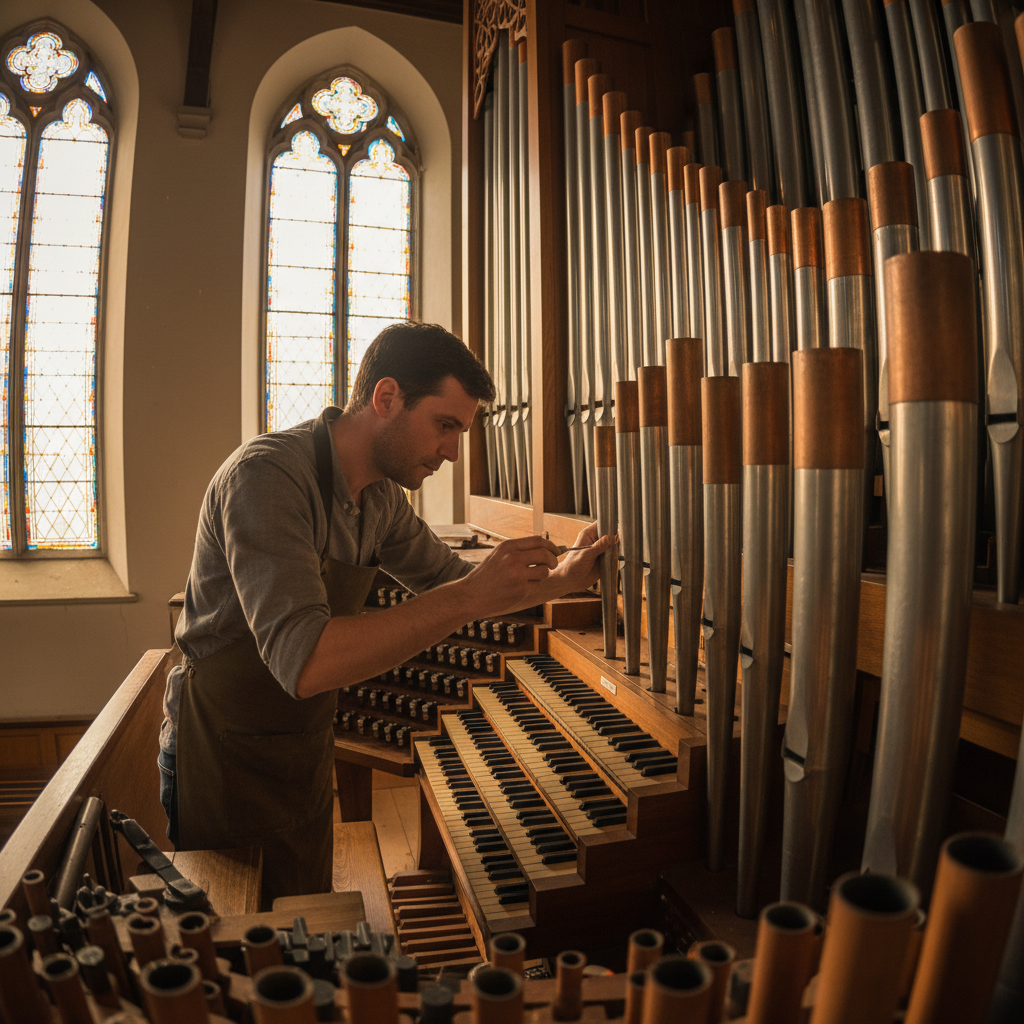
60 hrsTuned across three temperature cycles in the installation space. Equal temperament or historical temperament set per specification.
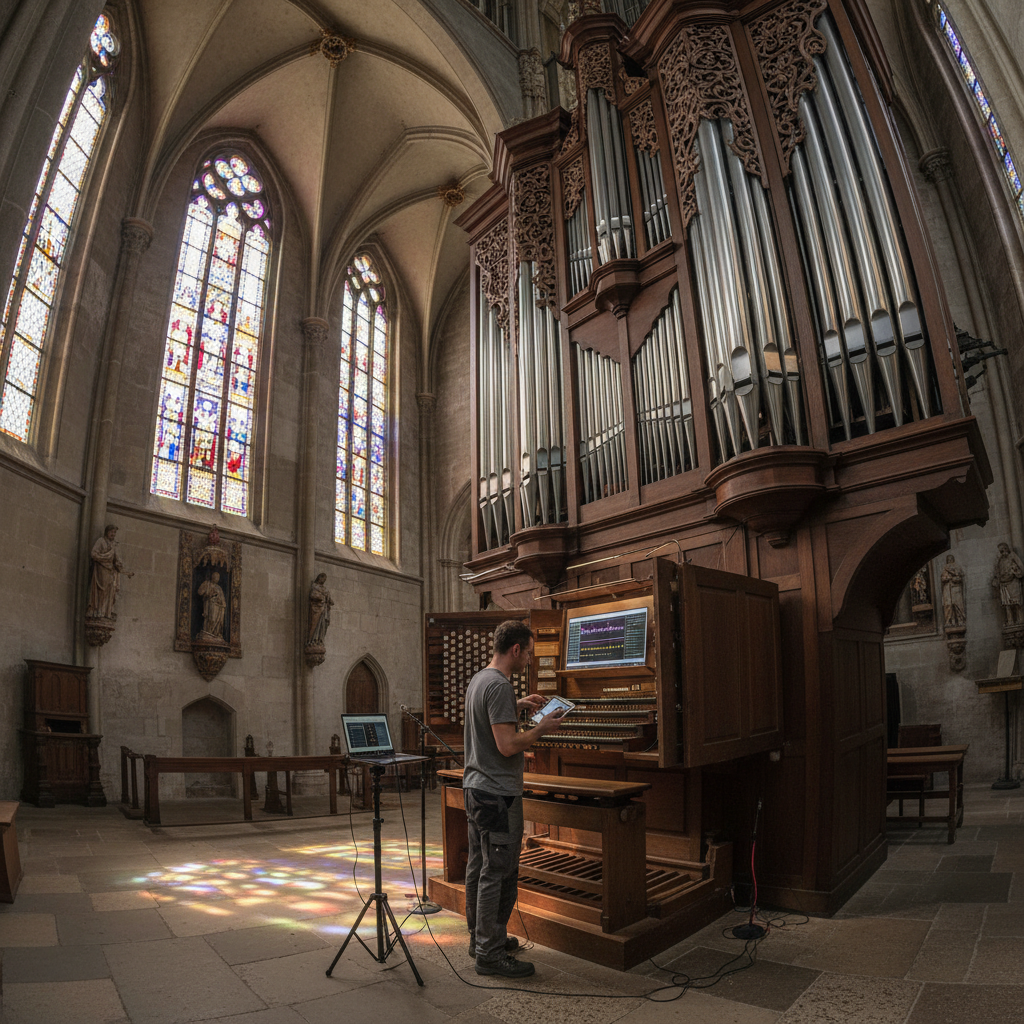
The tolerance at which we measure reed shallot curvature. Not because the specification demands it — because the pipe demands it. Every rank has a voice. Our job is to find it.
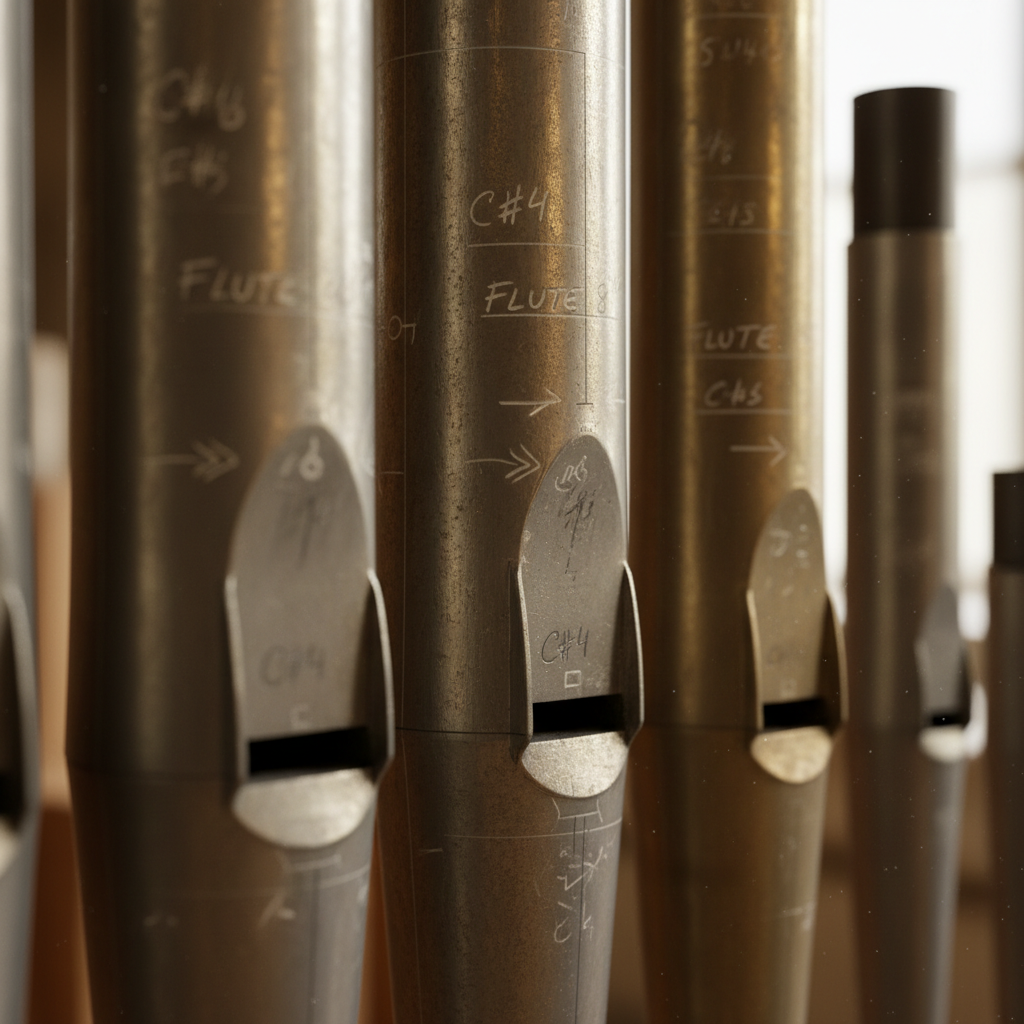
The distance between a pipe’s languid and its mouth determines the character of speech — bright or dark, prompt or slow. Set by eye and ear, confirmed by measurement.
Every key, every stop, every combination piston connected by hand. Electrical systems traced, documented, and — where necessary — replaced with period-appropriate components.
Stone buildings breathe with the seasons. We return at summer, winter, and the following spring to stabilize every rank across the building's full thermal range.
Churches, cathedrals, conservatories, and private collections. Each instrument treated as a singular acoustic object — not a product, not a project number.
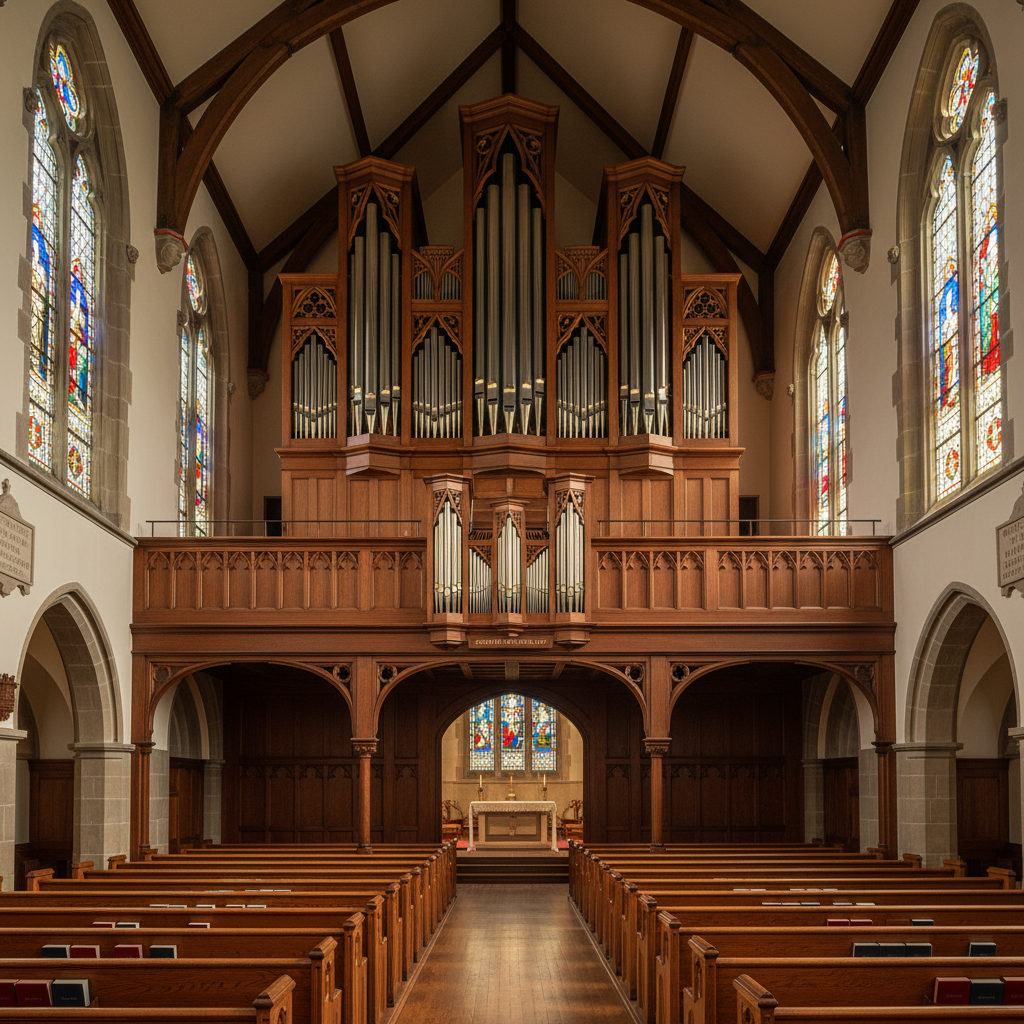
Three-manual 1912 Fisk-Nanney tracker. 1,847 pipes cleaned, releathered, and revoiced. Returned to service after 11 years of silence.
"They didn't restore our organ. They restored its voice. There is a difference, and they know it."
— Dr. Margaret Hollenbeck, Director of Music
A 28-page document built from 40 years of restoration practice. Covers condition assessment methodology, budget framework by organ type and age, heritage board communication, phased restoration scheduling, and acoustic documentation requirements.
Not ready for the guide?
Request a Condition Assessment